What Causes Ice Dams, and Why Your Gutters Are Part of the Story
July 24, 2026
QUICK ANSWER: Ice dams form when heat escaping into your attic melts snow on the upper roof, and that meltwater refreezes into a ridge of ice at the cold roof edge. For a dam to build, the roof needs snow on it while the upper surface sits above 32°F and the eaves stay below freezing. Over several days of melting and refreezing, water pools behind the ice and works up under the shingles, where it can leak into the attic, walls, and ceilings. Gutters don't cause ice dams, but clogged or ice-packed gutters give that trapped water one more cold spot to sit against your roofline.
By February you've probably seen the icicles hanging off your eaves like teeth, maybe a brown ring spreading across a bedroom ceiling. That whole mess starts on the roof, above your head, in a spot you can't see from the driveway. Homeowners across the Fox Valley deal with it every hard winter, and most of them blame the gutters first. The gutters are part of the story. They're just not the part most people think.
Ice dams are one of those problems that look simple and aren't. A ridge of ice builds up along the bottom edge of your roof, water gets trapped behind it, and eventually that water finds its way indoors. Snow, heat, and cold air all have to line up for it to happen. Once you understand how those three work together, the icicles stop being a mystery and start being a warning you can actually read.
What Causes Ice Dams on a Cold-Climate Roof
An ice dam is a ridge of ice that forms at the edge of a roof and blocks melting snow from draining off. The water that backs up behind that ridge is the real problem, because it can leak into your walls, ceilings, and insulation.
The whole thing comes down to one uneven condition: different parts of your roof are different temperatures. For a dam to form, you need snow sitting on the roof while the upper part of the roof surface is above 32°F and the lower edge stays below freezing. The snow on the warm upper section melts. That water runs down the slope, hits the cold lower edge near the eaves, and freezes again. Do that a few dozen times and you've built a wall of ice right where the roof meets the gutter.
Here's the part that surprises people. The heat melting your snow isn't coming from the sun most of the time. It's coming from inside your house. Warm air from your living space leaks up into the attic and heats the underside of the roof deck, which warms the shingles above it and melts the snow from below. The edge of the roof hangs out past your heated walls, so it stays cold. Warm middle, cold edge. That's the setup a dam needs.
Three ways heat gets to your roof.
Heat travels from your house to the roof by conduction, convection, and radiation. Conduction is heat moving straight through solid material, the way a metal spoon warms up in a hot pot. Convection is warm air rising and carrying heat with it, which is what happens when heated indoor air drifts up through gaps around light fixtures and attic hatches. Radiation is heat crossing open space, the way you feel the sun on your face. In a poorly sealed home, all three push heat into the attic and onto the roof deck, and the snow up top starts to melt while the eaves stay frozen solid.
The Freeze-Thaw Cycle That Feeds the Dam
One warm afternoon won't wreck your ceiling. The damage comes from repetition. Snow melts during the milder part of the day, the water refreezes when temperatures drop overnight, and the cycle repeats for days at a time. In the Fox Valley that pattern is just how January and February behave. We'll get a stretch in the mid-30s, then a night that drops into the teens, over and over.
Each cycle the dam grows a little taller and holds back a little more water. The ice only builds up on the sections of roof that stay below freezing on average, so it parks itself along the eaves and the gutter line. Meanwhile the water trapped above it stays liquid, pressed against the shingles. Water is patient. It works into every seam and nail hole in the roof covering and follows gravity wherever it can, and once it slips under a shingle it's inside the building envelope.
From there it drains into the attic. It can soak the insulation, run down into the wall cavities, or push through the ceiling and leave that brown stain you spotted from the couch. By the time the ceiling shows a mark, water has usually been moving through the structure for a while. An ice dam that goes unnoticed through a long cold snap can do real harm to framing, drywall, and everything stored up there.
The moisture doesn't leave when the ice melts, either. Damp insulation and wet framing are exactly what mold and mildew need to take hold, and that turns a roofing problem into an indoor air problem. Drying things out fast matters as much as stopping the leak.
Where Your Gutters Actually Fit In
Gutters take the blame for ice dams every winter, and it's worth being straight about this: a gutter doesn't create a dam. The heat and cold do that. But your gutters sit right at the coldest, lowest edge of the roof, which is ground zero for where ice collects. So they're wrapped up in the problem whether they cause it or not.
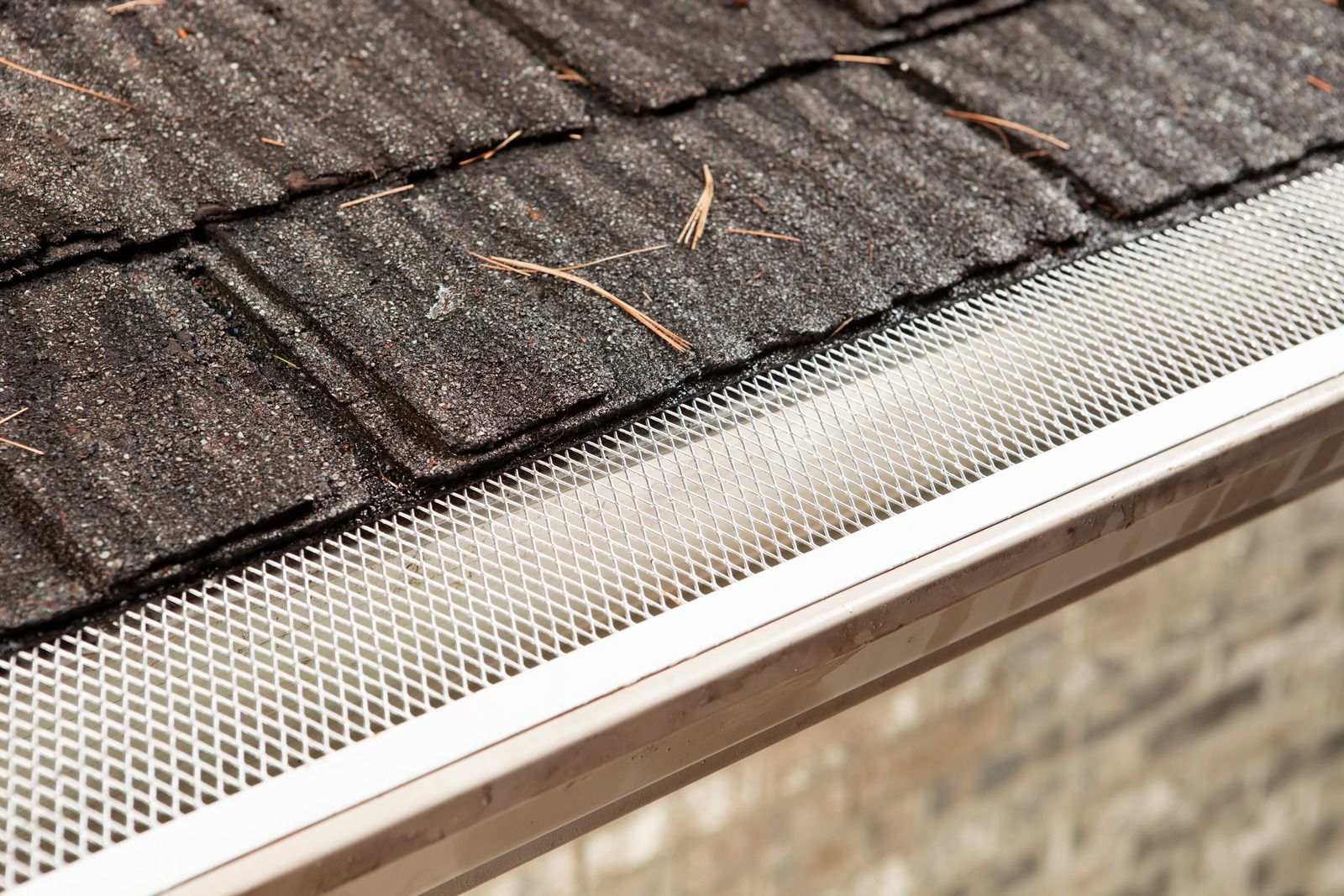
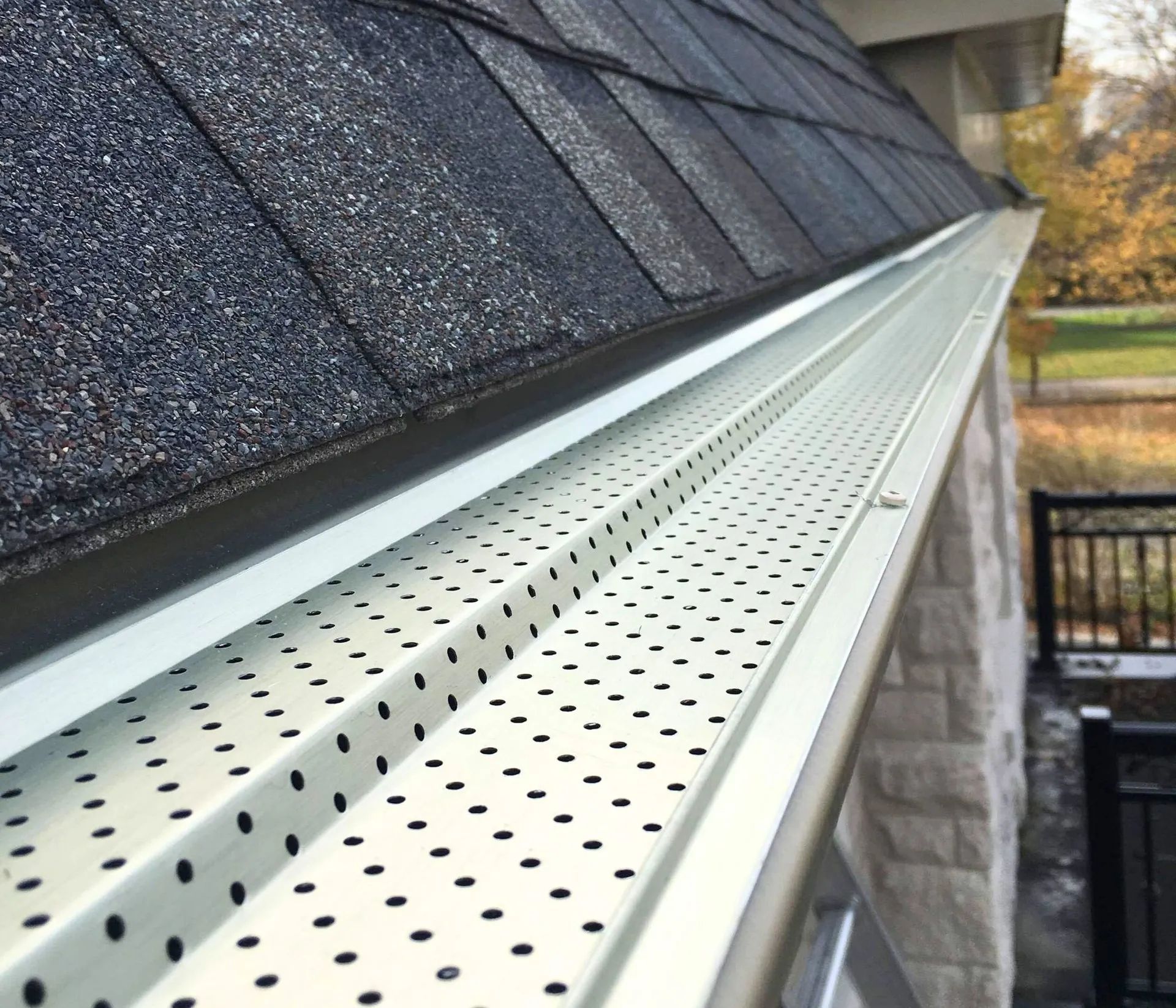
Two things about gutters actually matter here. The first is drainage. When snow melts on the upper roof, that water needs a clear path off the roof and away from the house. Clean, open gutters and downspouts give it that path. Gutters packed with last fall's leaves, seed pods, and pine needles give it nowhere to go, so the water lingers at the edge exactly where it's most likely to refreeze. Clearing debris out of the troughs and flushing the downspouts before winter lets meltwater flow through instead of pooling.
Ice and icicles in the trough
The second thing is what happens once winter is underway. Gutters and downspouts can fill with their own ice and icicles, and a gutter full of ice is a solid cold shelf sitting against your fascia and roof edge. That ice gives the dam a base to build on. Keeping the gutters and downspouts clear of packed snow and hanging icicles through the season reduces how much ice can anchor at the roofline. It won't fix a warm attic, but it removes one more cold surface from the equation.
I've seen plenty of homes where the gutters were spotless and the ice dam formed anyway, because the attic was the real issue. And I've seen clean gutters make a borderline roof drain fine instead of backing up. Gutters are a supporting player. Treat them as part of the fix, not the whole fix.
TIP: Before the first heavy snow, clear all leaves and debris from your gutters and run a hose through the downspouts to confirm they drain freely. Meltwater that can leave the roof can't sit at the edge and refreeze.
Why a Warm Attic Is the Real Culprit
Since most dams start at the roof edge, something has to be warming the roof higher up, and that something is almost always heat leaking out of your house. Fix the heat loss and you take away the melting that starts the whole chain. This is where the lasting solutions live.
Sealing comes first. Warm, moist indoor air sneaks into the attic through gaps around recessed lights, plumbing stacks, the attic access door, and any spot where a wire or pipe passes through the ceiling. Air-sealing those leaks keeps the heat where you want it, in your rooms, and off the underside of the roof. Adding insulation before you've sealed the leaks is like putting on a sweater with the front unzipped.
Insulation depth
After sealing, the amount of insulation on your attic floor decides how much heat conducts up through the ceiling. Most experts put the target at R-30 at a minimum, with R-38 preferred in northern climates like ours. More insulation means a colder roof deck, which means the snow up top stays snow instead of turning into the water that feeds a dam.
Attic airflow
The last piece is ventilation. Air needs to move in under the eaves through the soffit vents, travel along the underside of the roof, and exit through vents near the ridge. That steady flow of cold outside air keeps the whole roof deck near the outdoor temperature, which flattens out the warm-middle, cold-edge difference that dams depend on. A sealed, well-insulated, well-vented attic keeps the roof cold from peak to eave, and a cold roof doesn't melt its own snow.
Other heat sources hide up there too. Chimneys that run warm from a wood stove, bathroom and kitchen exhaust fans dumping heat into the attic, and leaky heating ducts all raise the roof temperature in spots. Any of them can create the uneven warmth a dam needs, so they're worth checking when the obvious fixes don't fully solve it.
Reading the Warning Signs on Your Home
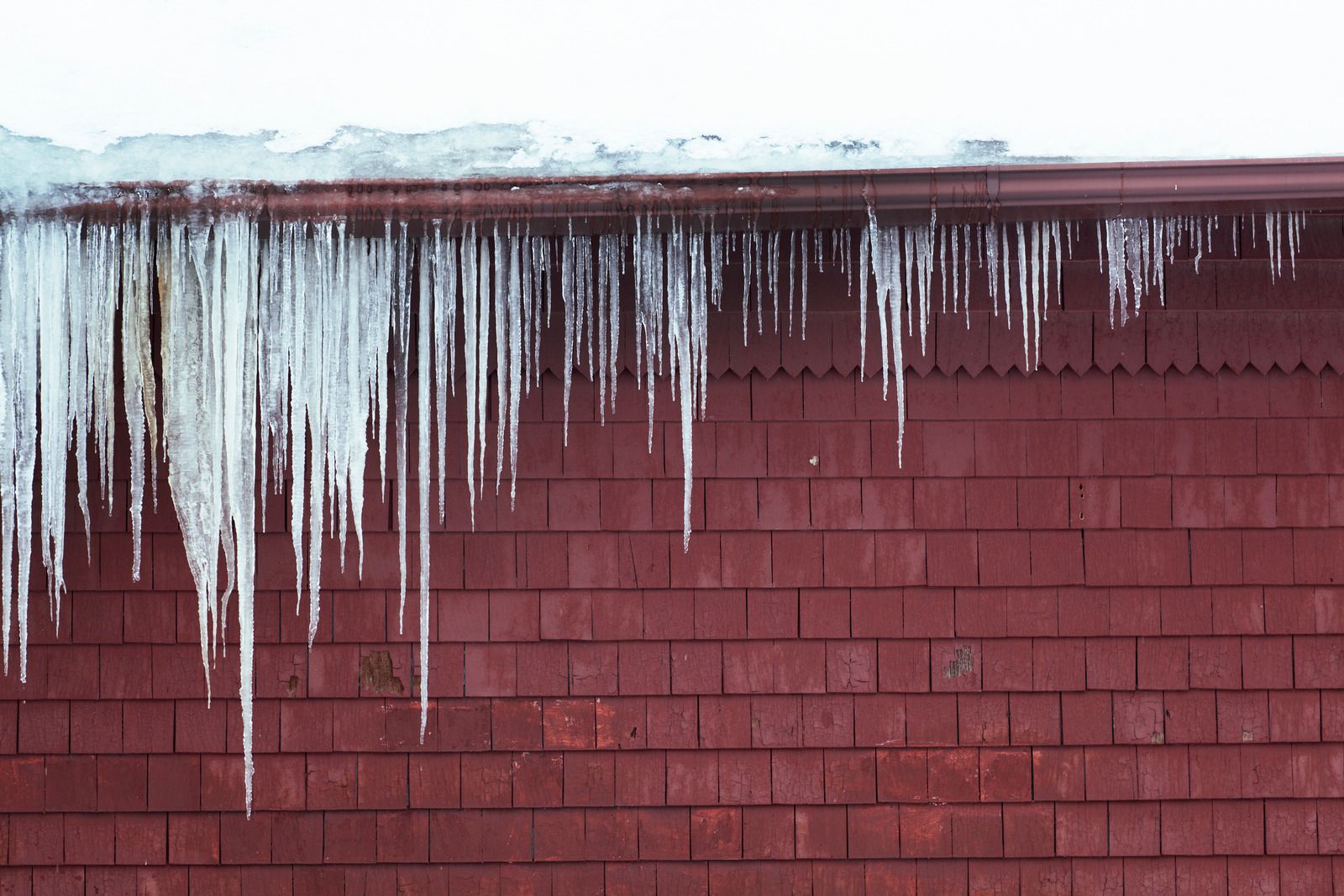
Your roof tells you what's happening if you know where to look. A thick row of icicles along the gutter line is the classic tell. Icicles mean water is melting up on the roof, running down, and refreezing at the edge, which is the exact process behind a dam.
Look for a band of ice built up along the eaves while the middle of the roof is bare or slushy. That contrast, ice at the bottom and clear roof above, is the temperature difference made visible. Inside, watch for water stains on upstairs ceilings and along the tops of exterior walls, damp spots near the roofline, or peeling paint. Any of those can mean water has already found its way behind a dam and into the structure.
If water is actively running into the house during a thaw, cutting a channel through the ice at the edge lets the trapped water drain off the roof. Hosing warm tap water along the dam and working upward from the lower edge will open a path. It's a stopgap, not a repair. The channel refreezes within days, and the real fix is still a colder attic and clear gutters.
WARNING: Chipping, hammering, or torching ice off your roof can tear up shingles and fascia, and standing on a snowy ladder in winter is how people get hurt. If a dam is leaking into your home, get a professional look rather than climbing up after it yourself.
Frequently Asked Questions
Do gutters cause ice dams?
No. Ice dams form from uneven roof temperatures caused by attic heat, not gutters. Clogged or ice-packed gutters give meltwater a cold spot to refreeze, worsening dams. Clean, free-draining gutters help water leave the roof.
Will cleaning my gutters stop ice dams?
Not on its own. Clean gutters let melting snow drain off the roof, which helps, but they don't address the warm attic causing the melt. The lasting fix combines clear gutters with air-sealing, insulation, ventilation.
How cold does it have to be for ice dams to form?
The roof needs snow on it, with the upper surface above 32°F and the lower edge staying below freezing. In practice, Fox Valley's daytime thaws followed by hard overnight freezes make for ideal dam-building weather.
Are icicles on my gutters a sign of a problem?
Often, yes: a few small icicles are normal, but a heavy, thick row along the eaves means snow is melting on the roof and refreezing at the edge — the same process behind every ice dam.
Can ice dams damage the inside of my house?
Yes. Water trapped behind a dam works under shingles into the attic, soaking insulation, running down walls, and staining or cracking ceilings. Lingering moisture invites mold. A stain means water has moved for a while.
Should I pull snow off my roof to prevent dams?
Removing snow takes away one ingredient a dam needs. A long-handled roof rake lets you pull snow from the lower roof while standing on the ground, since rakes can scrape shingles or hit power lines.
Getting Ahead of Next Winter
The best time to think about ice dams is the stretch before the snow flies, when the roof is bare and the ladder work is safe. Clear the gutters, look hard at how warm your attic runs, and deal with the heat leaks while the weather cooperates. A roof that stays cold and gutters that stay open give the next cold snap a lot less to work with, and that's the difference between watching icicles form and worrying about the ceiling underneath them.
Book a pre-winter gutter cleaning and downspout flush — clear troughs so meltwater drains instead of freezing at your roofline. Pro-Flow Seamless Gutters LLC
brings 1
year of dedicated, hands-on experience to homeowners in Shiocton, Wisconsin. and across the wider Fox Valley.