How Ice Dams Form and the Role Your Gutters Play
August 30, 2026
QUICK ANSWER: An ice dam forms when snow melts on the upper part of a roof, runs down to the colder eaves, and refreezes into a ridge that blocks further runoff. Water trapped behind that ridge backs up under the shingles and can work its way into the attic and ceiling. Your gutters don't start this process, but they sit exactly where the ice collects, so a gutter system that's clogged, iced over, or poorly pitched gives the dam more material to build on and more places to cause damage on its way down. Clear, well-secured gutters won't stop a dam from forming on their own, but they change how much damage that dam does to your home and to the gutter system itself.
A Shelf of Ice Where Your Roofline Meets the Gutter
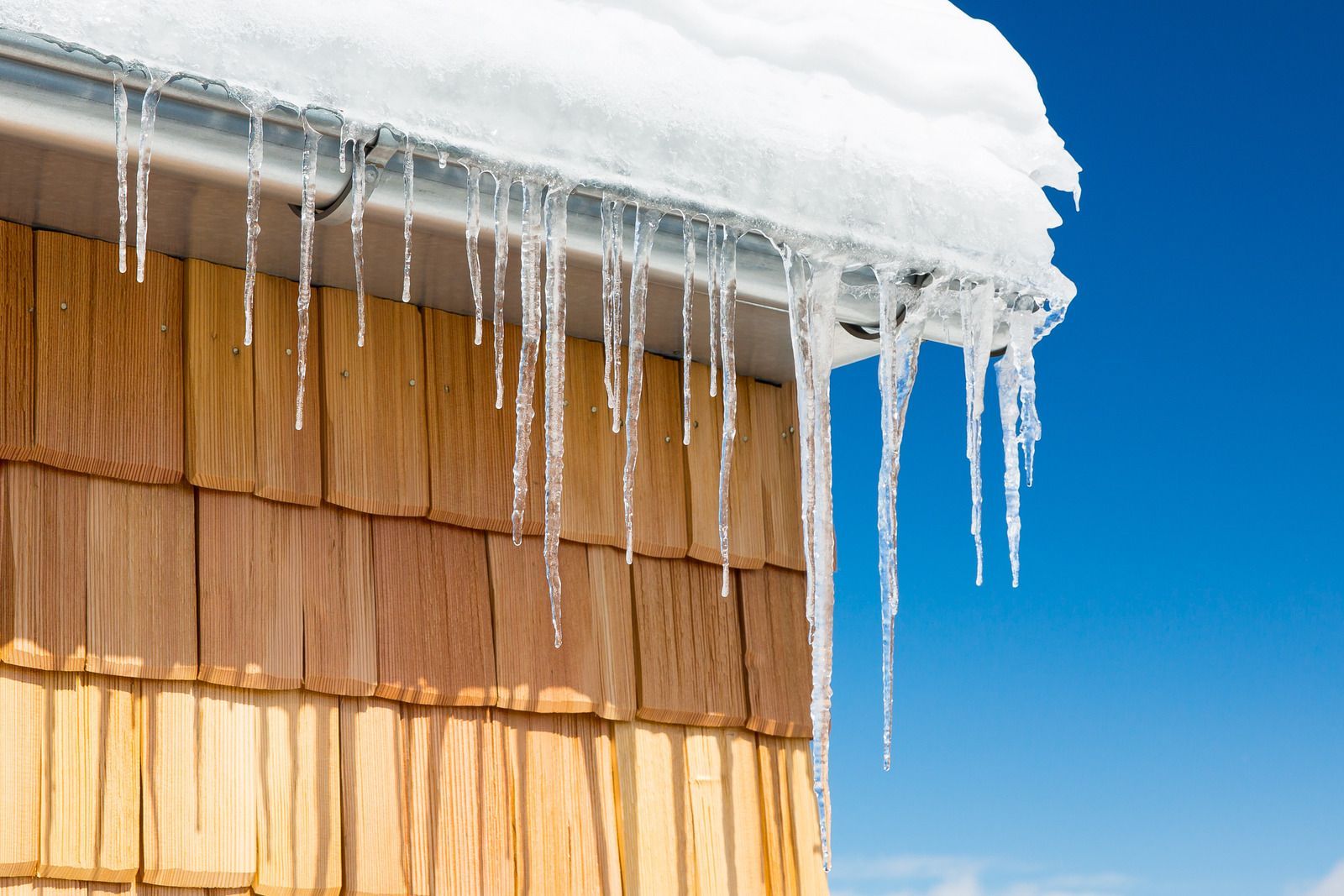
Walk your property line on a January morning after a stretch of thaw-and-freeze weather and you'll see it before you think about it: a ridge of ice sitting along the lower edge of the roof, sometimes an inch thick, sometimes closer to a foot, with icicles hanging off the gutter like a row of teeth. That ridge is an ice dam, and it's been building for days, not hours. One warm afternoon followed by one hard freeze doesn't do this. It takes a run of days where the roof melts a little and refreezes a little, over and over, until the ice has enough mass to hold water behind it.
By the time you notice the icicles, the gutter underneath them is usually carrying real weight. A gutter built to move a few gallons of water an hour is instead anchoring a block of ice that can run into hundreds of pounds on a long stretch of roofline. That's the part homeowners in Shiocton and around the Fox Valley don't always connect: the same system that moves water off the house in July is holding a chunk of that ice in February, ready for the job or not.
The Uneven Roof Behind Every Dam
Ice dams are a temperature problem before they're a gutter problem. For one to form, a roof needs snow cover, a section higher up that stays above freezing, and a section lower down, usually right at the eaves, that stays below it. The warm section melts snow into water. That water runs downhill until it hits the cold section, where it stops being water and becomes ice instead. Do that enough times in a season and the ice stacks up into a dam right at the edge of the roof, exactly where your gutters live.
Most of that warmth comes from inside the house, not from the sun. Heat drifts up out of living spaces, through gaps around light fixtures, attic hatches, and plumbing stacks, and settles against the underside of the roof deck. The edge of the roof overhangs the heated part of the house, so it never gets that warmth and stays close to the outdoor air temperature. Warm patch up top, cold patch at the edge: that's the setup, and it repeats itself every time the weather cycles through a thaw and a freeze. A cold, well-sealed attic slows this whole cycle down. A leaky one speeds it up.
Where Your Gutters Actually Enter the Picture
Your gutters aren't the cause of an ice dam, and it's worth being direct about that. But they're not innocent bystanders either. Two things about a gutter system change how bad a dam gets and how much damage it leaves behind.
Drainage Capacity
When meltwater comes off the warm section of the roof, it needs somewhere to go. An open, well-pitched gutter with a downspout that's flowing freely gives that water a path off the roof and away from the foundation. A gutter packed with last autumn's leaves and seed pods gives that same water nowhere to go, so it pools at the low edge, the coldest point on the whole roof, and freezes there instead of draining away. That standing water becomes extra material for the dam.
Structural Load
Once a dam starts forming, it doesn't just sit on the shingles. It builds down into the gutter trough and around the hangers holding the gutter to the fascia board. A gutter that's already carrying ice from an earlier storm gives the next melt cycle a cold surface to freeze against immediately, so the dam grows faster and heavier than it would against a clear, empty trough. I've walked properties in February where the gutter itself had pulled away from the fascia under the weight of accumulated ice, long before anyone noticed water inside the house.
TIP: Before the first hard freeze of the season, run water through every downspout and confirm it exits cleanly at the bottom, then check that extensions carry that water several feet past the foundation rather than dumping it against the house. A downspout that drains slowly in November is the one most likely to freeze solid by January.
What a Winter of Ice Does to the Gutter System Itself
Interior water damage gets most of the attention when people talk about ice dams, and it deserves it. But the gutter system takes its own beating over a hard winter, and that damage tends to show up gradually rather than all at once. Repeated freeze-and-thaw cycles work fasteners loose from the fascia board a little at a time, the same way freeze-thaw cracks a driveway. A run of gutter carrying a season's worth of ice can end up sagging in the middle, pulling away from the roofline just enough to let water sheet down behind it instead of into the trough.
Seams and end caps take a beating too. Seamless gutter sections resist this better than sectional runs because there are fewer joints for ice to pry apart, but even a seamless run has corners, outlets, and end caps where expanding ice can work a gap open. Once that happens, the gutter is compromised in a spot that won't show itself until the next heavy rain, months after the ice that caused it has melted. A gutter that looks fine in June can be carrying hairline damage from a February dam that nobody spotted at the time.
Downspouts freeze from a different mechanism entirely. Water sitting in a downspout after a partial thaw refreezes overnight, and if that happens several nights running, the whole downspout can turn into a solid column of ice. A frozen downspout backs water up into the gutter above it, adding to whatever is already collecting at the roofline and giving the dam yet another place to anchor.
Reading the Signs Along Your Roofline
Your roof and gutters usually tell you what's happening before it becomes a real problem, if you know what to look for. A thin, uniform row of small icicles is common and not usually a concern on its own. A thick, heavy shelf of ice building up behind the gutter, or icicles thick enough that you can see them growing week over week, means meltwater is running and refreezing steadily, which is the exact process behind a dam.
Look at the gutter line itself for a visible gap between the gutter and the fascia board, or a section that's pulling downward more than the runs on either side of it. Both point to ice weight stressing the hangers. Inside the house, watch the ceiling along exterior walls and near the roofline for discoloration or a musty smell. Bubbling paint is another one worth catching early. Those signs mean water has already found a path in, and it usually takes several days of an active dam before any of it shows up indoors.
WARNING: Never chip, hammer, or use a torch on ice built up in or around your gutters. That approach cracks seamless seams, tears fasteners out of the fascia, and can put you on a ladder over ice in the exact conditions where a fall does the most damage. If a dam is actively leaking into your home, get a professional assessment rather than working on it yourself from a ladder.
Getting Your Gutter System Ready Before the Freeze
The window to prepare your gutters for ice dam season is short and it closes fast once the first real cold snap hits. Clearing leaves and debris out of the troughs and confirming every downspout flushes freely both need dry, above-freezing weather. So does checking that hangers are still tight against the fascia. Once the first snow sits on the roof and temperatures start swinging through the freeze point, that same work becomes a lot harder and a lot less safe to do yourself.
A gutter system that's clean, securely fastened, and draining well when the first snow falls won't stop an ice dam from forming on a poorly insulated roof. What it will do is keep meltwater moving instead of pooling, and it gives the dam less to build on at the one point along your roofline where it's guaranteed to show up every hard winter. The homeowners who deal with ice dams the least aren't the ones fighting the ice every February. They're the ones whose gutters were already clean, tight, and draining before the first snow landed.
Frequently Asked Questions
Do gutters cause ice dams to form?
No. Ice dams result from uneven roof temperatures caused by heat escaping into the attic. Gutters don't cause them, but clogged or frozen gutters can worsen water and ice accumulation.
Will cleaning my gutters in the fall prevent ice dams?
Not by itself. Clean gutters help meltwater drain away from the roof edge, but they cannot prevent heat loss. Proper attic insulation, ventilation, and clear gutters work together to reduce risks.
Can an ice dam actually damage my gutters?
Yes. Heavy ice can strain gutter hangers, loosen fasteners, stress joints, and cause gutters to sag or pull away from the fascia. Damage may become noticeable months later during spring rainfall.
Are icicles hanging from my gutters always a sign of trouble?
Not always. A few small icicles can be normal after snowfall. However, thick icicles that continue growing may indicate ongoing melting and refreezing, potentially signaling an ice dam.
Should I try to remove ice from my gutters myself?
Avoid hammering, chipping, or heating hardened ice around gutters. These methods can damage gutters, roofing, and fascia while increasing fall risks. Professional assessment is safer when ice dams cause active leaks.
Preparing Your Home for Winter Ice Dam Risks
A properly functioning gutter system is an important part of managing winter runoff, even though gutters themselves do not cause ice dams. Keeping gutters clear, secure, and properly draining helps prevent meltwater from sitting along the roof edge and adding unnecessary weight to an already stressed area. In Shiocton, WI, where repeated freeze-and-thaw cycles can put considerable pressure on roofing and drainage systems, these small maintenance details can make a meaningful difference throughout winter.
For homeowners working with a local professional, Pro-Flow Seamless Gutters LLC
brings 1
year of experience serving Shiocton, WI, with an understanding of the practical gutter concerns that Wisconsin properties face. A clean and stable gutter system cannot correct attic heat loss or uneven roof temperatures, but it can provide a clear path for water when melting does occur. Combined with proper attic insulation and ventilation, dependable drainage helps reduce the conditions that allow winter moisture to become a larger problem.