Cracked Seams and Sagging Brackets: Where Winter Gutter Problems Really Start
September 14, 2026
QUICK ANSWER: Winter gutter problems in Wisconsin come from three forces working at once: the sheer weight of snow and ice sitting in the trough, repeated freezing and thawing that flexes seams and fasteners, and standing water that turns to ice faster than moving water does. None of this needs a hard freeze to cause damage. A single week of temperatures bouncing above and below thirty-two degrees can loosen a hanger or crack a seam that took years to develop. The damage usually stays hidden until a spring thaw reveals a sagging run or a stretch pulled away from the fascia. A gutter system built and cleaned out for a cold climate holds up far better through a full Wisconsin winter than one designed with milder weather in mind.
Walk the perimeter of almost any Fox Valley home in late March and you can read the winter right there in the gutter line. A section sags a half inch lower than the one next to it. A hanger has pulled loose from the fascia board, leaving a gap where a bracket used to grip tight. A seam that ran arrow-straight back in October now shows a hairline crack at the corner. None of this happened in a single afternoon. It built up over months, one freeze and one thaw at a time, while the roofline kept doing its quiet job of moving snowmelt and rain away from the house.
Homeowners who move here from warmer states are often caught off guard by how much punishment a gutter takes. In a climate that rarely dips below freezing, a gutter mostly just needs to shed rain. Here, that same gutter has to survive months of snow load, repeated ice formation, and a freeze-thaw rhythm that barely lets up between November and March. Understanding why that combination is so hard on a gutter system is the first step toward keeping yours in decent shape when spring finally shows up.
A Season That Never Settles
The hard part of a Wisconsin winter isn't the cold itself. It's how much the temperature moves. A stretch of single-digit nights followed by a thirty-eight-degree afternoon is routine from December through March, and every swing changes the physical state of whatever water is sitting in a gutter or clinging to a roof edge. Metal contracts in the cold and expands again once the sun comes out, and the fasteners holding a gutter to the house get put through that same push-pull dozens of times each winter.
A single hard freeze that lasted the whole season would actually be easier on a gutter system than the back-and-forth pattern the Fox Valley usually delivers. Consistent cold keeps everything locked in place. It's the thaw-and-refreeze rhythm — sun on the roof at midday, temperatures dropping again after dark — that keeps stressing the same joints and seams, over and over, for months. A gutter system installed with only rainfall in mind is fighting its own design for a good chunk of the year around here.
The Weight Problem: Snow and Ice Loading Gutters Were Never Built to Hold
A gutter is built to move water, not to carry sustained weight. Snow changes that the moment it piles up along a roof edge and settles into the trough. Fresh powder is light. But as it compacts, soaks up meltwater, and partially refreezes, it gets considerably heavier per cubic foot — dense, wet snow can outweigh the same volume of dry powder several times over. Sit that heavier load in a run of gutter for days or weeks and it puts steady downward pressure on every hanger underneath it.
Two things usually decide how well a gutter handles that pressure. The first is fastener type: older spike-and-ferrule systems, where a long nail runs through a metal sleeve into the fascia, tend to work loose under sustained weight faster than a modern hidden hanger does, because the nail has less resistance to being pulled out. The second is gauge and material — thin aluminum stock that holds up fine in a mild climate can visibly deform under the combined weight of ice and wet snow, which is exactly why installers working in snow country typically reach for a heavier gauge than what gets used further south. Hanger spacing matters too. A run with supports set too far apart has less backing distributed along its length, so the sections between hangers are the first to bow under a heavy, wet load.
TIP: After a heavy, wet snow, look at your gutter line from the ground before you climb up to inspect anything. A visible dip, a section pulling away from the fascia, or a stretch holding an unusual amount of snow all point to a run under more stress than it should be — and it's worth a professional look before the next storm piles on more weight.
Freeze-Thaw Cycling Wears Down Seams and Hangers
Every material in a gutter system — aluminum, steel, sealant, fasteners — expands and contracts slightly with temperature change. On its own, that movement isn't a problem. A gutter is designed to handle normal thermal expansion across a range of seasonal temperatures. What causes trouble is how often that expansion and contraction happens during a Wisconsin winter, and how much moisture is usually sitting around while it does.
Sectional gutters take the worst of it at their seams, the joints where two lengths meet. Water that gets into a seam and then freezes expands by roughly nine percent in volume, and that expansion acts like a wedge, prying the joint open a fraction more with every freeze cycle. A seam that held fine in October can show a visible gap by February from that repeated wedging alone, long before any single freeze was ever cold enough to crack it outright. Seamless gutter runs remove one of the main places this happens, since there's no horizontal seam along the length for water to sit in and freeze — though corners, end caps, and downspout connections still take the same freeze-thaw stress.
Fasteners face a related problem. A nail or screw holding a bracket to the fascia is gripping wood that expands and contracts with temperature and moisture of its own. Enough freeze-thaw cycles and that repeated movement works a fastener slightly looser each time, the same way a nail driven into a deck board slowly backs out after a few seasons of weather. A hanger that's marginally loose in November can be measurably loose by March, even though no single event caused the change.
Ice Buildup Adds Its Own Stress
Set aside the mechanics of how an ice dam actually forms — that involves heat loss through the roof and attic ventilation, and it's its own topic entirely. Plain ice buildup inside a gutter causes problems on its own. Standing water freezes at a noticeably higher temperature than moving water does, which is the same reason a dripping faucet is less likely to freeze during a cold snap than one shut off tight. A gutter draining slowly because of a partial clog, a low spot, or an undersized downspout is going to ice over well before a gutter draining freely, even at the exact same outside temperature.
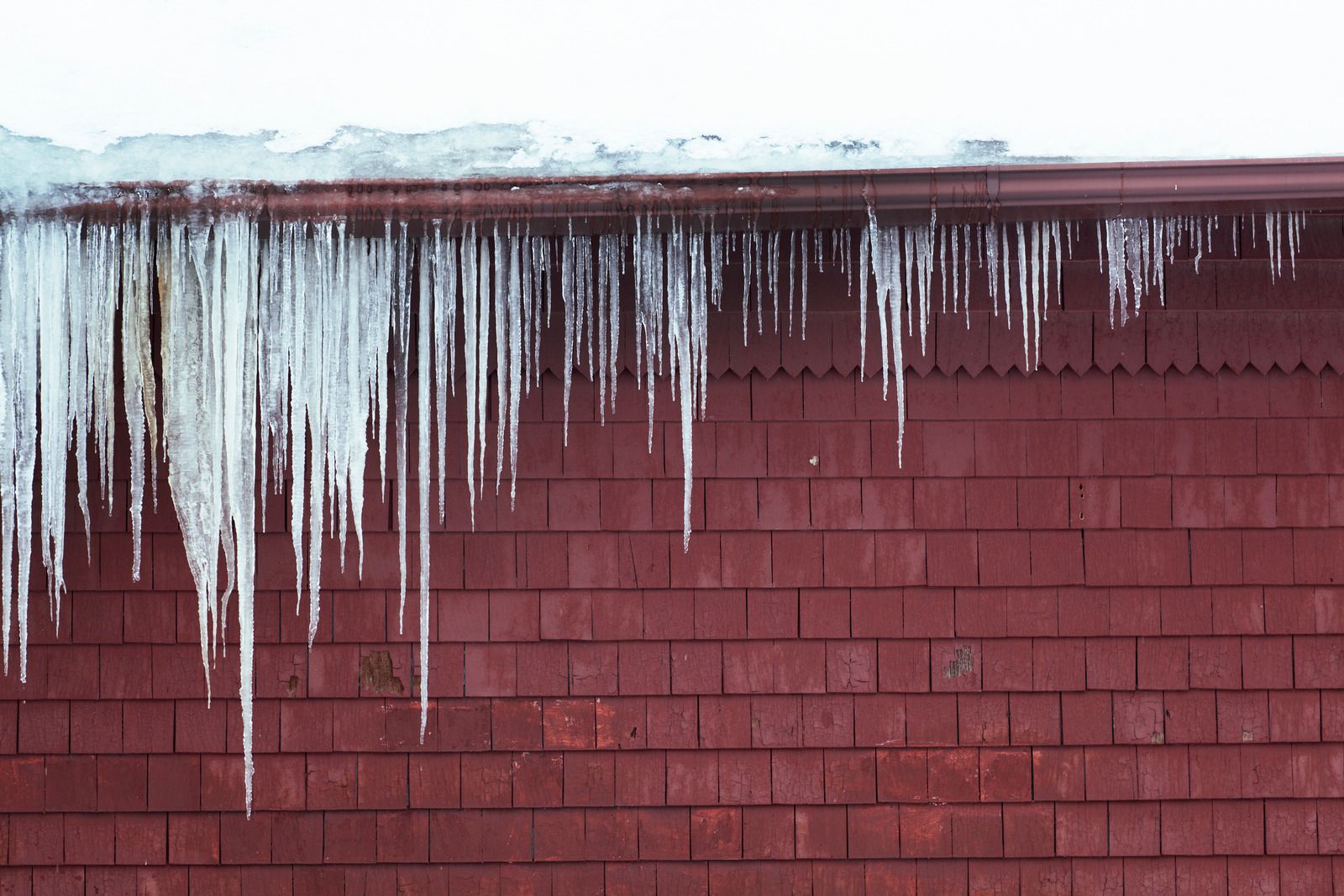
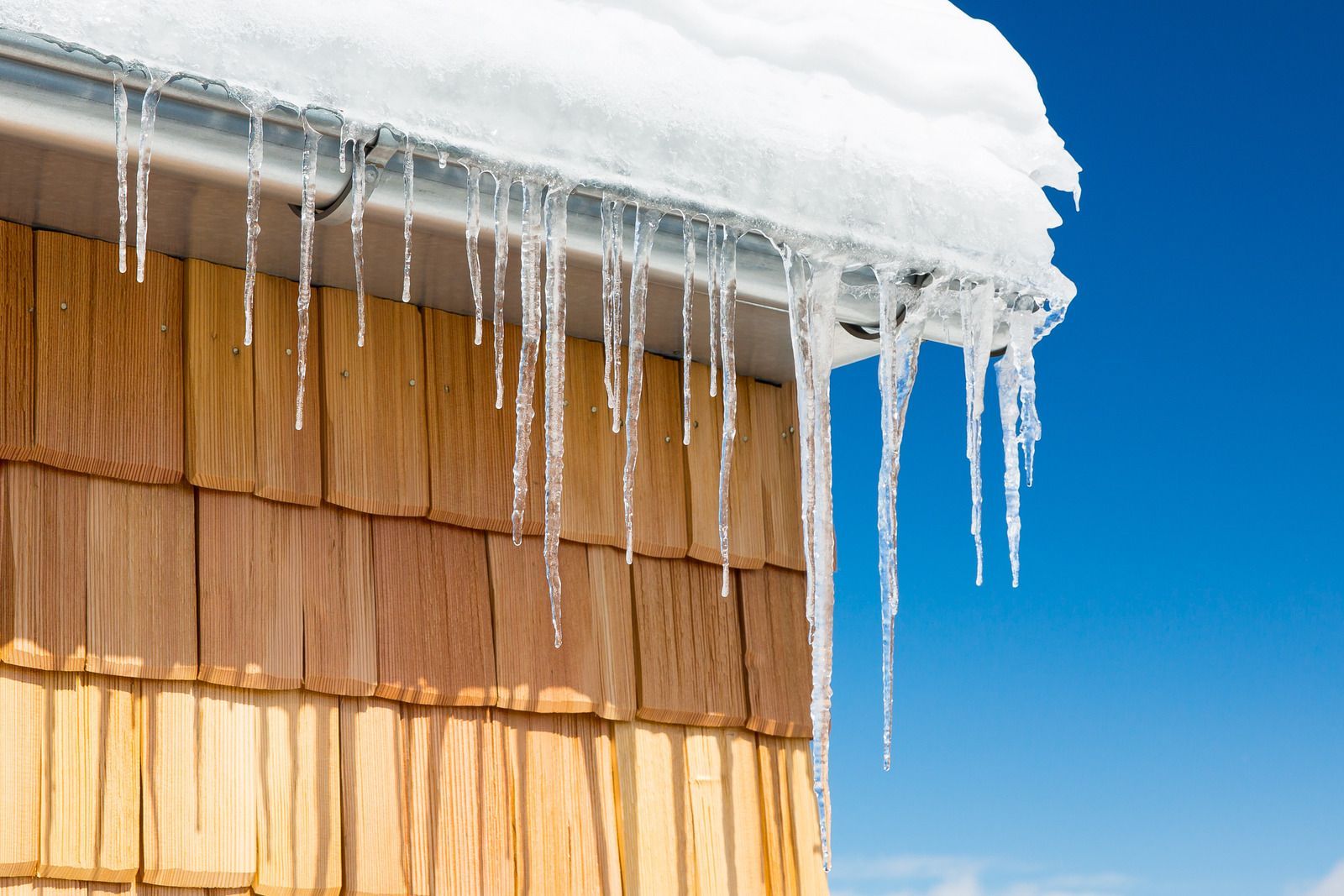
Once ice forms inside a gutter, it doesn't just sit there. It adds weight on top of whatever snow load is already there, it can block the path for any more meltwater trying to get through, and as it thaws and refreezes with the daily temperature swing, it keeps applying that same wedging pressure to seams and end caps described above. Icicles hanging along a roofline are the visible tell — they mean water found a way to drip and refreeze along the edge of the gutter or roof instead of draining through the downspout the way it's supposed to.
WARNING: A gutter loaded with ice weighs a lot more than it looks like it does, and standing directly underneath one to knock ice free isn't worth the risk. Falling chunks can be large and heavy enough to cause a real injury, and the gutter itself can give way without warning under the combined weight while someone's working beneath it.
How We Approach Wisconsin Winters
We install and maintain gutter systems specifically for Fox Valley winters, so freeze-thaw stress and snow load get thought through from the start instead of tacked on afterward. That shows up in the details: hanger spacing set tighter than a mild-climate installer might use, real attention to slope so water actually drains instead of sitting and freezing, and seamless construction that removes the horizontal seams most prone to ice-wedging damage along the run.
Most winter gutter damage builds quietly across a season instead of announcing itself all at once. That's why we treat a pre-winter cleaning as more than routine housekeeping. A gutter clear of leaves and debris in late fall drains faster and freezes less readily than one carrying a partial clog into the first hard freeze, which means less stress on every seam and hanger for the months that follow. While we're up there, we're checking hangers, seams, downspout connections, and slope — not just scooping out what's fallen into the trough — because those are the parts that take the brunt of a Wisconsin winter.
Frequently Asked Questions
Why do my gutters seem to get worse every winter even though nothing dramatic happens?
Winter damage builds gradually, not all at once. Each freeze-thaw cycle adds slight stress to seams and fasteners, and those small movements accumulate all season until a sag or loose section shows up by March.
Does snow weight alone cause gutters to fail, or does it need ice too?
Snow alone can stress a gutter, especially heavy wet snow, but ice makes it worse. Ice adds concentrated weight at low points and can block drainage, meltwater then piles onto an already heavy load
Is there a difference between how aluminum and seamless steel gutters hold up in winter?
Gauge and construction matter as much as material. Heavier aluminum and steel resist deformation under snow and ice better than thin stock. Seamless construction helps either metal by removing seams where water collects and freezes.
Can gutters be damaged in winter even if they were installed correctly?
Yes. Correct installation reduces how likely and severe winter damage gets, but it doesn't remove the forces at play. Even a well-installed, properly sloped system still faces freeze-thaw cycling, snow load, and ice formation.
Should I worry about winter gutter damage if I don't see any obvious problems right now?
It's worth checking anyway. Much of this damage isn't visible from ground level in winter. A slightly loosened hanger or a hairline seam crack might not show until the problem has already progressed further.
How does a Wisconsin winter compare to what gutters experience in a milder climate?
The core difference is repetition. A gutter in a mild climate feels freezing stress rarely, while one in the Fox Valley feels it dozens of times each winter, atop snow load milder climates rarely see.
Why Winter-Ready Gutters Are Worth the Effort
A gutter system that survives a Wisconsin winter intact isn't a matter of luck. It comes down to details addressed before the first freeze arrives: proper slope, hanger spacing built for real snow load, and seams able to hold through months of expansion and contraction. Skipping any of those details rarely shows up right away. Instead, it shows up in March, when a sagging run or a hairline crack finally reveals what the season did to a system that looked fine back in October.
Pro-Flow Seamless Gutters LLC, based in Shiocton, WI and serving across the region, brings that same attention to every gutter system it installs or maintains, even with 1
year in the trade focused on this cold-climate work. Proper slope, hanger spacing built for snow load, and seamless construction that skips the seams most prone to freeze damage all factor into how each job gets approached. A gutter built this way doesn't just survive a Wisconsin winter. It holds its shape through one season after the next, quietly doing its job overhead.